
Posted by Bethan on Sep 29, 2026
The best men's wellies for walking depend on where you walk, how far you go and the time of year. A heavily insulated neoprene welly can be useful on cold, muddy winter walks, while a lighter cotton-lined boot may feel more comfortable in milder weather.
For regular countryside walking, look beyond waterproofing. Grip, fit, cushioning, flexibility and weight can make a considerable difference once you've been walking for a while.
In this guide, we'll look at what makes a good walking welly, some of the options we stock at Cherry Tree Country Clothing, and when you may be better choosing walking boots instead.
Are Wellies Good for Walking?
Yes, wellies can be very practical for walking, particularly on muddy fields, wet footpaths, woodland tracks and dog walks where keeping your feet dry is the priority.
However, there is a difference between a basic Wellington boot and one designed with longer periods of walking in mind.
For regular walking, we recommend looking for:
-
A treaded sole that provides grip on mud and wet ground
-
A cushioned footbed
-
A secure fit around the foot and heel
-
Enough flexibility to walk comfortably
-
An adjustable calf where useful
-
A lining suitable for the temperature
-
A weight you're comfortable walking in
For long distances, steep ground or rocky paths, a walking boot will often provide better support and stability.
What Makes a Good Welly for Walking?
For regular walking, look beyond waterproofing. These five features can make a noticeable difference to comfort and practicality.
Grip
Look for a deep tread for better traction on muddy fields, tracks and soft ground. No sole can prevent slipping in every condition, particularly on ice or wet rock.
Comfort & Cushioning
A cushioned or removable footbed can make regular walking more comfortable. A secure heel also helps reduce excessive movement inside the boot.
Fit
Allow room for your socks and natural foot movement without excessive heel lift. An adjustable calf strap or gusset can also help with fit around the leg.
Warmth
Neoprene lining provides extra insulation for colder walks. For spring, summer or active walking, a cotton-lined or unlined welly may feel more comfortable.
Weight
Heavier wellies may be fine for shorter muddy walks, but you'll notice the extra weight more as the distance increases.
Men's Walking Wellies We Recommend
Rather than ranking these from first to fifth, we've picked different wellies to suit different walking conditions and preferences.
| Wellington | Lining | Calf Adjustment | Footbed | Best Suited To |
|---|---|---|---|---|
 Grisport Stream II Grisport Stream II |
4mm neoprene | Adjustable rear fitting and gusset | Padded removable insole | Cold, wet and muddy walks |
 Grisport Groundwater Grisport Groundwater |
Cotton | Adjustable side strap and gusset | Padded removable insole | Milder weather and active walking |
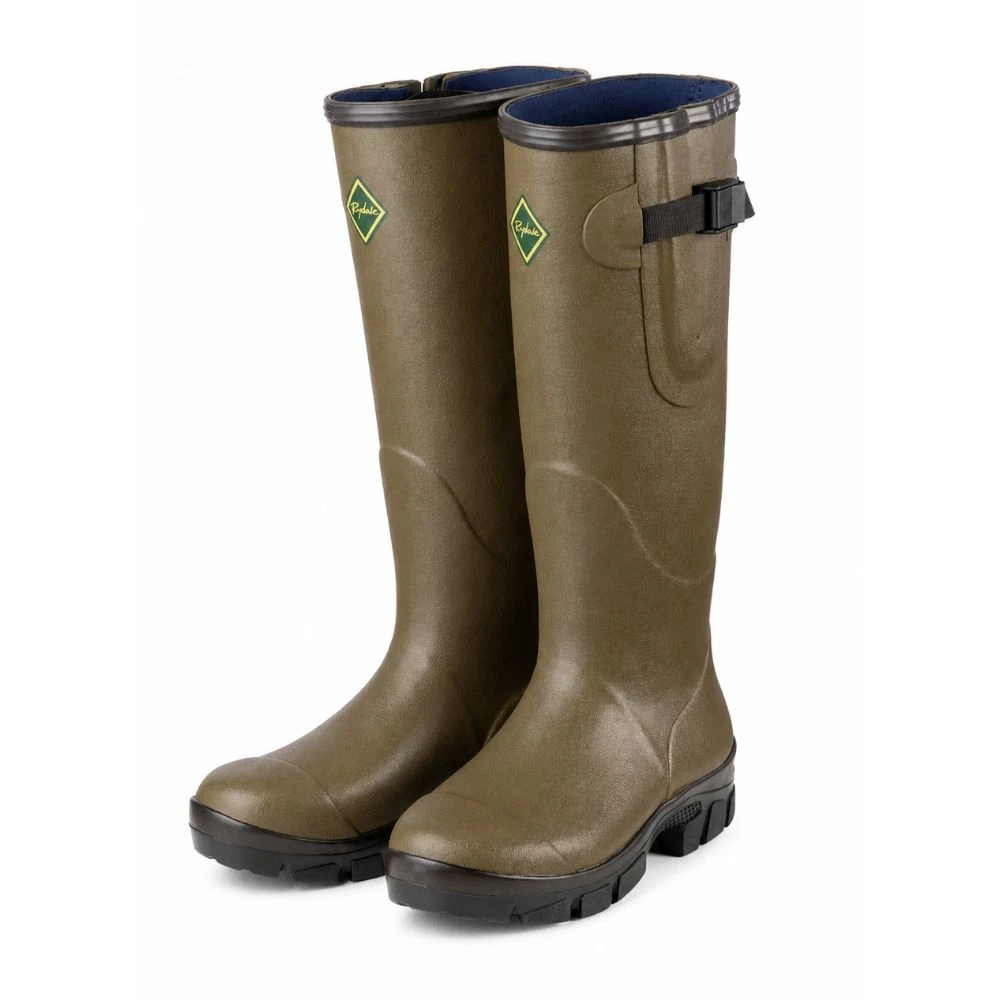 Rydale Lisset Rydale Lisset |
Neoprene | Adjustable buckle strap | Not specified by manufacturer | Dog walking, muddy fields and colder weather |
Grisport Stream II Neoprene Wellington
The Grisport Stream II is worth considering if you regularly walk through mud and wet ground in colder weather.
It has a 4mm neoprene lining, padded removable insole and Grisport's deep-cleated Sure-Tread outsole. Grisport also gives the boot internal structured heel support and an adjustable rear calf fitting with a waterproof gusset.
The neoprene makes this one of the warmer options, so we'd be more inclined to choose it for autumn and winter walking than warm summer conditions.
Worth considering if: you want an insulated walking welly with a deep tread for muddy, wet and colder conditions.
Grisport Groundwater Wellington
If you don't want a warm neoprene lining, the Grisport Groundwater offers a different approach.
It uses a cotton lining and has a deep-cleated Sure-Tread rubber sole, padded removable insole and structured internal heel support. There's also an adjustable side strap and gusset to alter the calf fit.
Grisport specifically positions the cotton lining as an alternative for people who find neoprene too warm and for spring and summer use.
At approximately 1,920g per pair in size 42, it's also lighter than the Stream II, which Grisport lists at approximately 2,240g per pair.
Worth considering if: you want a walking welly for milder weather or find neoprene-lined boots too warm.
Rydale Lisset Men's Neoprene Wellington
The Rydale Lisset is another insulated option for muddy countryside walking.
It has a neoprene lining, deep tread and an adjustable buckle strap around the calf. Rydale positions the Lisset for countryside activities including dog walking and describes the tread as designed to provide traction and stability on muddy ground.
The neoprene lining makes it particularly relevant if you're looking for warmth during colder walks.
Worth considering if: you want a neoprene welly for dog walking, muddy fields and general countryside use.
Neoprene vs Cotton-Lined Wellies for Walking
Neither option is automatically better. The right lining depends mainly on the weather, how active you are and when you usually wear your wellies.
| What to Compare | Neoprene-Lined Wellies | Cotton-Lined Wellies |
|---|---|---|
| Warmth | Warmer and better suited to colder conditions | Less insulation for milder conditions |
| Best time of year | Autumn and winter | Spring, summer and milder days |
| Good for | Cold dog walks, wet winter conditions and periods of lower activity | Active walks and people whose feet become warm quickly |
| Possible downside | Can feel too warm in mild weather | Doesn't provide the same level of insulation as neoprene |
| Consider this if... | Keeping your feet warm is a priority | You want less insulation for milder or more active walks |
Our tip: Think about when you'll wear your wellies most. The warmest lining isn't automatically the best choice if most of your walking is in mild weather.
How Should Walking Wellies Fit?
Walking wellies need enough room for your toes and socks without allowing your foot to move excessively inside the boot.
When trying them on:
-
Wear the type of socks you normally use for walking.
-
Check that your toes aren't touching the front.
-
Walk around and pay attention to heel movement.
-
Check for pressure around the widest part of your foot.
-
Make sure the calf isn't restrictive.
-
Try any adjustable calf strap or gusset.
-
Check that you can comfortably bend your ankle as you walk.
If you're between sizes, don't automatically size up without checking the individual boot. Wellington sizing and fit vary between manufacturers and models.
Wellies or Walking Boots: Which Are Better for Walking?
This comes down to the conditions and type of walking you're doing.
Choose Wellies For
- Muddy fields
- Wet grass
- Boggy ground
- Dog walking
- Farm tracks
- Shallow puddles and standing water
- Conditions where easy cleaning is useful
Choose Walking Boots For
- Longer-distance walks
- Rocky or uneven trails
- Steeper terrain
- Walks where ankle support matters
- Drier paths where a full Wellington isn't necessary
For many countryside walkers, having both is useful. Wellies handle the wettest and muddiest days, while walking boots are better suited to longer or rougher routes.
Can You Walk Long Distances in Wellies?
You can walk reasonable distances in a comfortable, well-fitting pair of wellies, but they're not always the best choice for long-distance walking.
The further you walk, the more important weight, cushioning, fit and support become.
If your walks mainly involve a few miles across muddy fields and tracks, a good walking welly can work well. If you're spending several hours on steep or uneven terrain, we'd normally look at walking boots instead.
What Socks Should You Wear with Walking Wellies?
The right socks can make wellies considerably more comfortable.
Look for walking or Wellington socks that provide cushioning around the foot without making the boot too tight. In colder conditions, a warmer sock can help, although you may need less insulation if your wellies already have a thick neoprene lining.
Avoid creating such a tight fit that your toes become restricted.
Shop Men's Wellies for Walking
We stock men's wellies suitable for dog walking, muddy fields, country work and everyday outdoor use, including neoprene-lined and lighter options.
If you're mainly walking longer distances or tackling rougher ground, you can also compare our walking footwear here:
Shop Our Recommended Men's Walking Wellies
Related Wellington Boot & Walking Guides
Looking for more help choosing footwear for wet and muddy walks? These guides cover dog walking wellies, walking boots, socks and choosing the right footwear for different conditions.



Find our country clothing guides useful?
Add Cherry Tree Country Clothing as a preferred source on Google to see more of our guides in Google Search.