Posted by Bethan Bithell on Apr 02, 2026
The best walking boots are those that match your terrain, provide good grip, waterproof protection and a comfortable fit for long walks.
Choosing the best walking boots depends on where you walk, the terrain you cover and the level of support you need. From waterproof linings like Gore-Tex and Spo-Tex to sole units designed for grip and comfort, understanding the key features will help you choose the right pair.
Choosing the right sole is an important part of finding the best walking boots, especially if you regularly walk on mixed or uneven terrain.
Spo-Tex vs Gore-Tex: What’s the Difference?
Spo-Tex and Gore-Tex are both waterproof and breathable membranes designed to keep your feet dry while allowing moisture to escape. Gore-Tex is widely known and often used in premium walking boots, while Spo-Tex, used in many Grisport walking boots, offers reliable waterproof protection at a more accessible price point.
For most UK walking conditions, both perform well, but Spo-Tex provides a strong balance of comfort, performance and value.
Best Walking Boots for Different Uses in the UK
The best walking boots will vary depending on how you plan to use them. Lightweight waterproof boots are ideal for everyday walking and dog walking, while more supportive boots are better suited to longer hikes and rough terrain.
Browse our range of walking boots and Grisport walking boots to find options suited to different conditions.
If you're considering Hoggs options, see our guide on which Hoggs boots are best.
Best walking boots for hiking
Hiking up and down Snowdonia or Scafell Pike, for most of us at least, may be quite a challenge, so wearing the right footwear is vital to ensure safety and comfort. These types of routes will often lead you to rough and rocky ground beneath your feet or, in some cases, perhaps wet grassy pathways. Wearing the correct footwear is extremely important therefore to help prevent slips and accidents.
No matter what your challenge might be, whether it be the ‘3 Peaks Challenge’, or even perhaps walking in Nepal, choosing the best walking boots will help to guarantee you enjoy your experience.
To ensure an enjoyable and safe hike, there are four key features you should look for, when purchasing your boots. These are:
- A sturdy sole unit, so that your boot doesn’t twist or slip when walking on rocky ground
- Plenty of ankle support to prevent twisting of your ankle, especially when walking down a mountain
- A boot that keeps your feet dry from rain, wet grass, moisture and sweat
- A boot that offers comfort and a good fit, helping to prevent blisters
For a range of options suited to different terrains, explore our full selection of walking boots designed for hiking and everyday use.
1. Sole Units
There are many ‘sole units’ available on the market, with most being manufactured from rubber, leather or compound material. It is always a good idea to talk to a shop assistant or contact the store directly to seek advice on what the best type may be to meet your individual needs.
Do consider that when hiking up mountains you really need a sole unit that will offer good grip, support, shock resistance and good traction. A top performing sole unit that offers all of these is the ‘Vibram’ outer sole unit and is usually found on all the best walking boots.
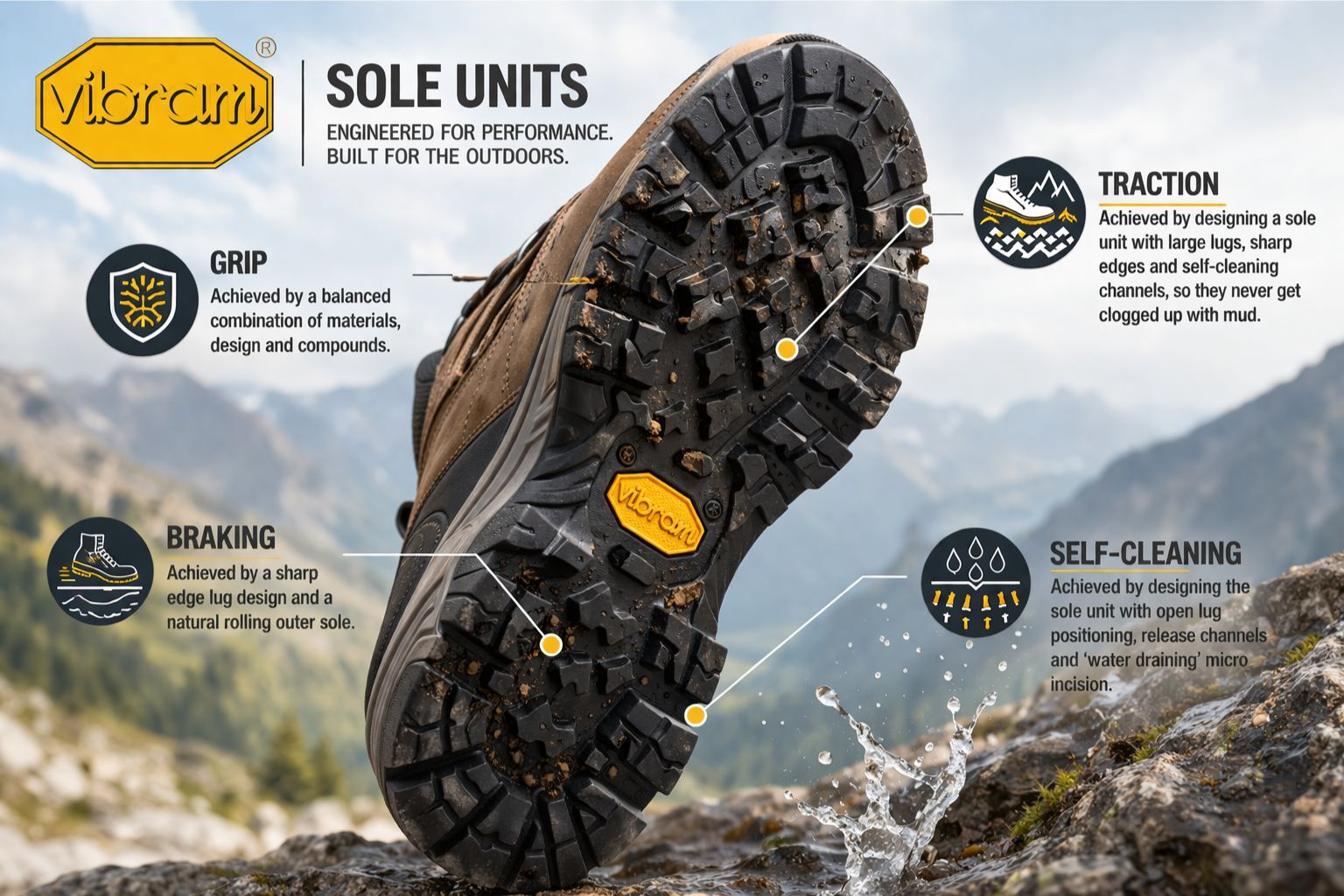
Vibram is a leading supplier of outer sole units and its outer soles have won many prestigious awards in recognition of their design and built-in capabilities.
Vibram sole units offer:
- Grip: achieved by a balanced combination of materials design and compounds
- Traction: achieved by designing a sole unit with large lugs, sharp edges and self-cleaning channels, so they never get clogged up with mud
- Braking: achieved by a sharp edge lug design and a natural rolling outer sole
- Self-Cleaning: achieved by designing the sole unit with an open lug positioning, release channels and ‘water draining’ micro incision
Many high-performance boots use Vibram outsoles for grip and durability. You can explore our range of Vibram outsole walking boots designed for stability across different terrain.
Another key industry player, Grisport, realises that a twisting sole unit, when walking, can be very dangerous. To ensure minimal movement in the footbed, and to offer plenty of stability, Grisport has designed a sole unit that includes a ‘Stabilizer’ layer in it. This unit prevents twisting when walking on rough terrain. Click here for more information about the Grisport Unique 5 Layer Sole Unit.
Brands like Grisport use advanced sole units in their designs, combining grip and comfort for everyday walking. Browse our range of Grisport walking boots to see examples of these features in action.
Understanding the type of sole unit is important. For a deeper comparison, see our guide on Vibram soles vs rubber soles and how they perform on different terrain.
2. Ankle Support
Without the right ankle support, walking on rough terrain can have an adverse impact upon the human body! If you are only used to walking on tarmac or perhaps grassed pathways, and then you suddenly venture on to rough terrain, your ankles may initially be too weak to respond to the quick moving, rigid movements required, when walking over rough ground.
Weak ankles and joints can easily twist and without care can, in some cases, result in a sprained or broken ankle! Out in the wilderness, with perhaps no mobile coverage for many miles, this is not a situation you want to be in…and hopping back to camp can take a long time and is not really an option!
Through careful selection of walking boots that have good ankle support you are at least helping to give your ankles the strength they need to climb up and down a mountain. Ankle support will also help with balance and stop you from falling or slipping, especially if carrying a heavy backpack or rucksack!
Ankle Support: Boot Comparison
If you're choosing between boots with strong ankle support, here’s a quick comparison:
| Image | Boot | Support Level | Best For |
|---|---|---|---|
 |
Grisport Crusader | High – Grisport Support System | Hiking, uneven terrain |
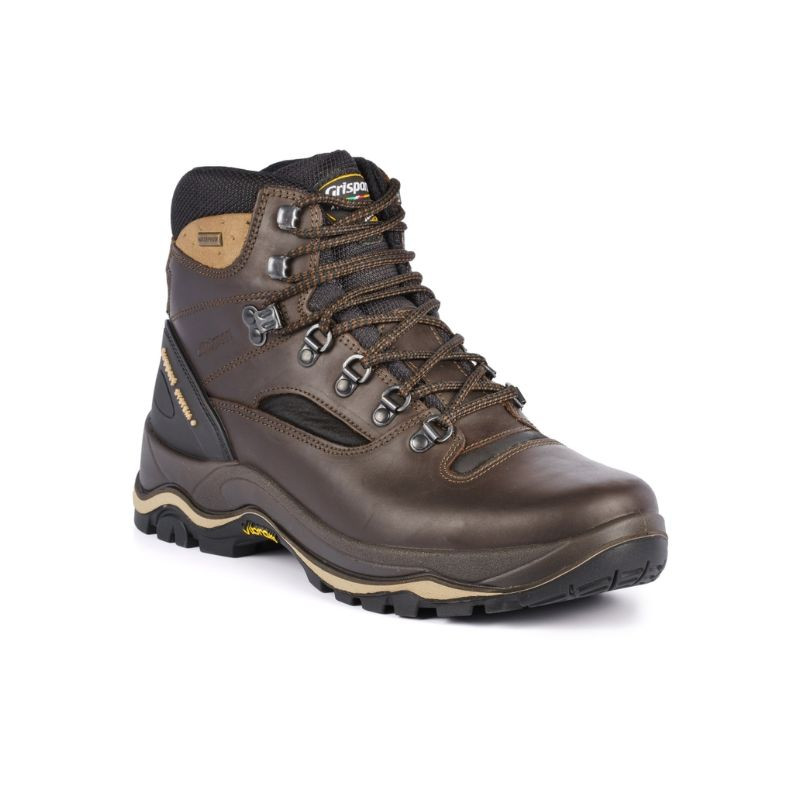 |
Grisport Quatro | High – Grisport Support System | Long walks, mixed terrain |
 |
Hoggs of Fife Aonach II | Very High – Tall Boot Design | Extra ankle support, heavy use |
Grisport boots have designed a support system that lock the ankle into place to prevent it from moving or slipping.
3. Dry feet
There’s nothing worse than having to take off your walking boots to change your socks and then having to put your feet back into damp boots. Damp, wet boots caused by walking in wet grass, through streams or perhaps from sweating feet can result in chilblains or even frostbite in some conditions. Therefore it is vital that your feet remain dry and comfortable all day.
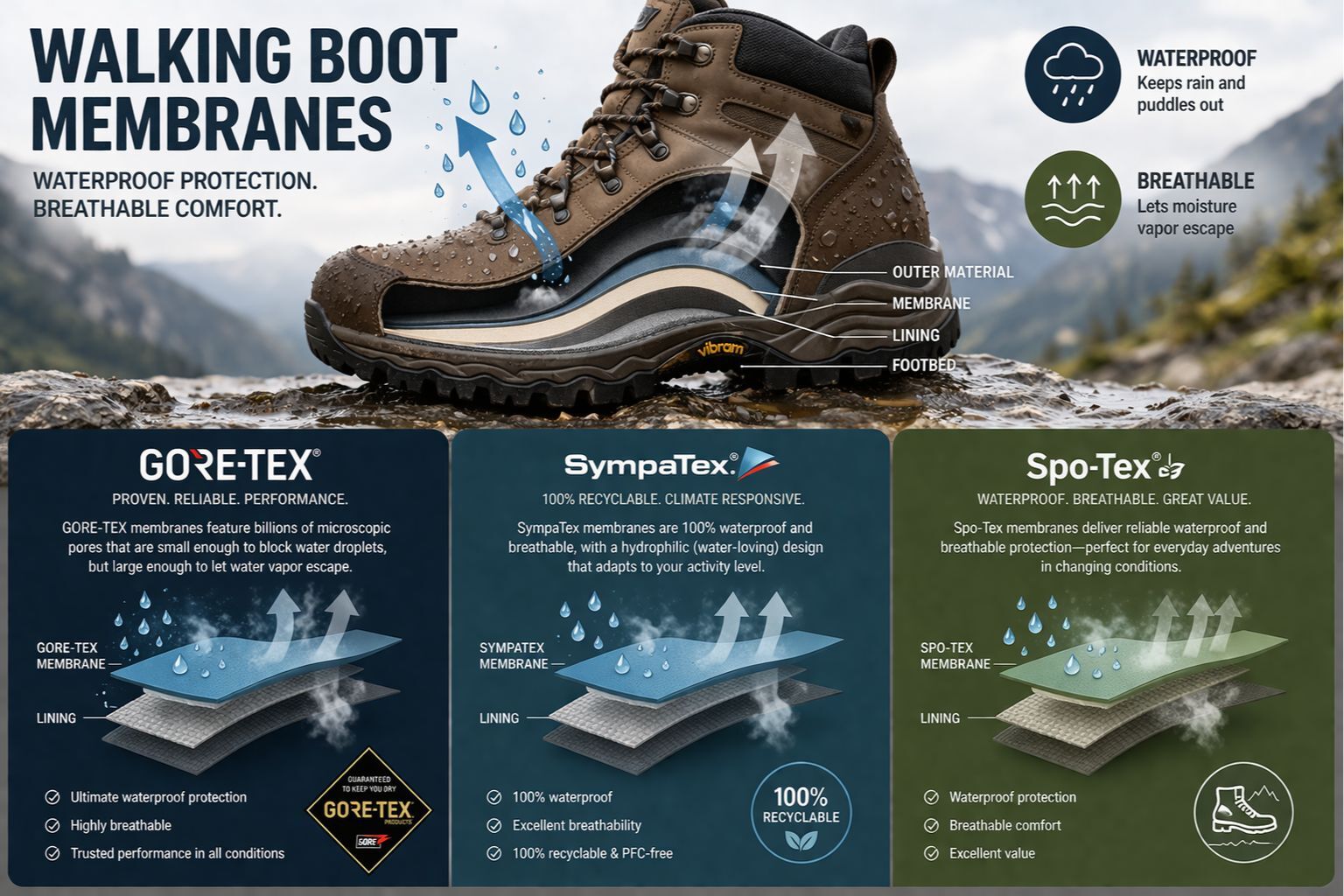
There are many waterproof and breathable linings available, including Gore-Tex, Sympatex and Spo-Tex. Waterproof and breathable linings will keep rain and damp out of your boots but will also help with drawing moisture away from your feet. As you walk, your feet will get hot and may start to sweat. By not having a breathable lining, the sweat will stay within the boots and socks, and will eventually reach your feet causing muscle ache and probably cold feet too!
Sympatex waterproof and breathable membranes are a premium option and are found in many high-performance walking boots.
The Sympatex membrane is available on leather and fabric walking boots. The main difference between a leather and fabric boot is that leather boots are easier to clean and maintain. Be careful however as fabric waterproof walking boots can tend to hold mud and water in the seams which, over time, will eat at the stitching. However, rigorous maintenance can help to prevent this.
4. Comfort and Fit
Which are the best walking boots for comfort and fit? Well, this is a difficult question to answer as it completely depends on the shape, condition and size of an individual’s feet. Everybody has unusually shaped feet that are unique to them. One foot may be bigger than the other, or may be wider than the other. However, there are a few key points you should follow when selecting a pair of walking boots:
Always try to test and try on a new pair of walking boots immediately after you have been out walking. This is because as you walk, your feet get hot and start to swell and this is the ideal time to try on a new pair of walking boots. If your feet are cold then you may not get the correct fit
Walking socks play a big part in ensuring your feet are comfortable when out walking. Consider taking the socks you intend to wear on a walk with you when you visit a store to try on new boots – or consider buying a new pair of socks to at the same time to ensure a great fit.
When trying new boots on, spend time lacing up the boots correctly to make sure you have the right tension and that nothing is digging in. There are many ways to improve comfort when lacing your boots. Watch our video below on the best ways to lace up your walking boots:
Set aside plenty of time to try on the boots in the store. Try on various styles and sizes to ensure a comfortable fit and walk around the store with them on.
Choosing the right walking boots comes down to comfort, support and the conditions you walk in.
If you're choosing between different sole types, it's worth exploring a range of walking boots to find the best combination of grip, comfort and durability for your needs.
Related Walking Guides
If you're looking for comfortable walking footwear and advice on staying comfortable outdoors, these guides may also help.

Shop Walking Footwear & Accessories
Choosing the right walking boots is only part of the equation. Explore our range of walking boots, hiking socks and footwear accessories designed to keep you comfortable on the trail.
Walking Boots
Browse waterproof walking boots and hiking boots designed for comfort, support and grip across varied terrain.
View Category →
Vibram Sole Walking Boots
Explore walking boots fitted with Vibram soles for reliable grip, durability and performance on challenging ground.
View Category →
Hiking Socks
Reduce friction and improve comfort with hiking socks designed for walking, trekking and long days outdoors.
View Category →
Boot & Shoe Bags
Keep muddy footwear contained during transport and storage with our range of boot and shoe bags.
View Category →
Find our country clothing guides useful?
Add Cherry Tree Country Clothing as a preferred source on Google to see more of our guides in Google Search.