Posted by B.Bithell on May 19, 2025
The most comfortable walking boots combine a secure fit, good grip, cushioning, waterproof protection and enough support for the terrain you walk on. Whether you need boots for everyday walking, hilly routes or wet countryside conditions, these are the key features to look for before you buy.
Below, we break down the five essential features of comfortable walking boots and explain why they matter for all-day comfort.
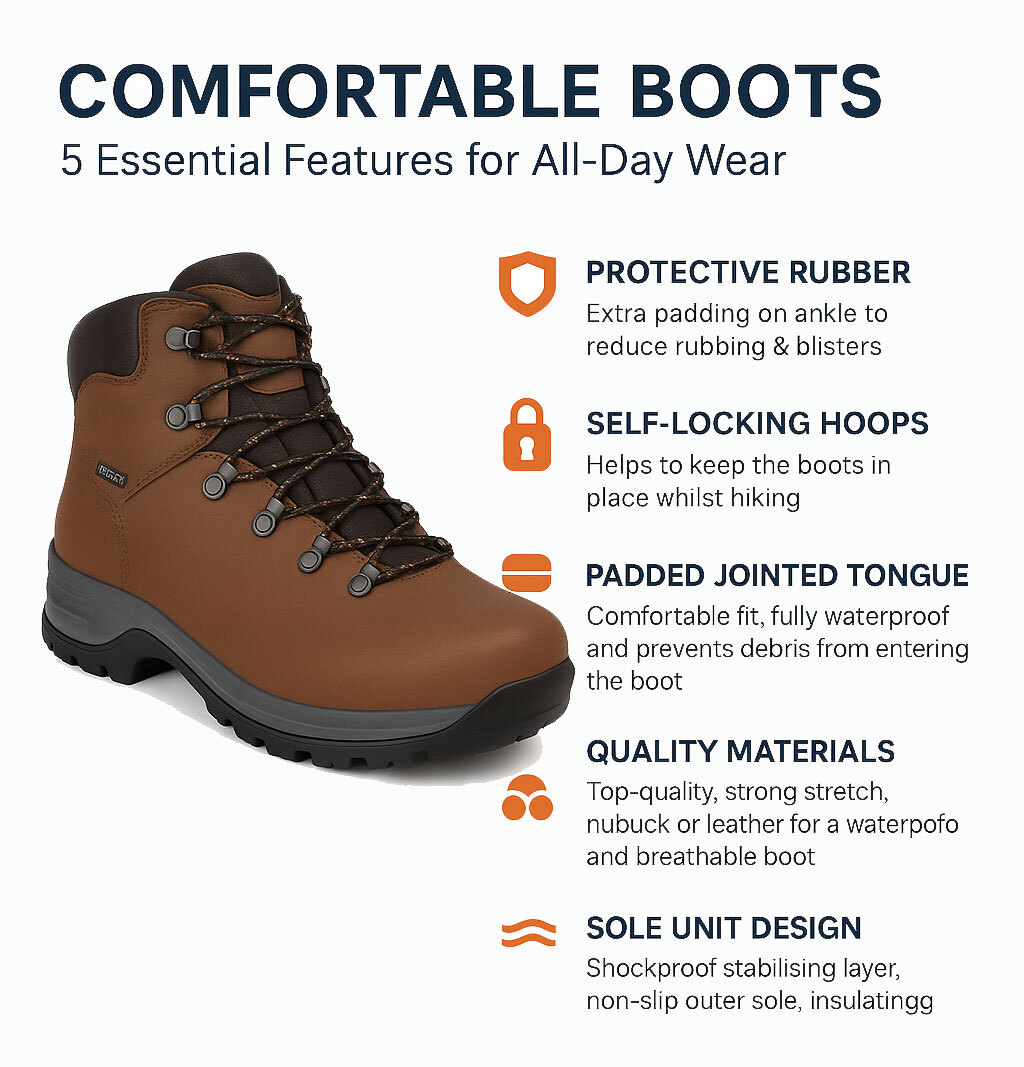
What to Look for in Comfortable Walking Boots
When choosing walking boots, focus on fit, waterproofing, grip, support and materials. A comfortable boot should feel secure around the heel, give your toes room to move, keep your feet dry and provide enough cushioning and grip for the ground you walk on.
Browse our range of walking boots to compare styles designed for everyday walking, hiking and wet weather use.
How Waterproof Walking Boots Work
Waterproof walking boots use breathable linings and treated outer materials to help keep water out while allowing heat and moisture from your feet to escape. This helps keep your feet drier and more comfortable on longer walks and in wet UK conditions.
When choosing waterproof walking boots, look for a breathable lining, a secure fit and a sole with enough grip for muddy or uneven ground.
1. Comfortable Fit
Comfortable walking boot should feel secure without pinching. Getting the fit right is essential, as poor fit is one of the main causes of rubbing, blisters and foot fatigue. If you're unsure how your boots should feel, read our guide on how to get the right walking boot fit at home.
If you struggle with rubbing or hot spots, read our guide to foot blisters and their causes.
2. Waterproof and Breathable Lining
Comfort is not just about cushioning. A good walking boot should also help keep your feet dry. Waterproof and breathable linings such as Spotex and Sympatex help block rain and wet grass while allowing moisture from your feet to escape, reducing discomfort on longer walks.
Example: Waterproof Walking Boot
| Boot | Image | Key Benefit |
|---|---|---|
| Grisport Lady Glide Boot | 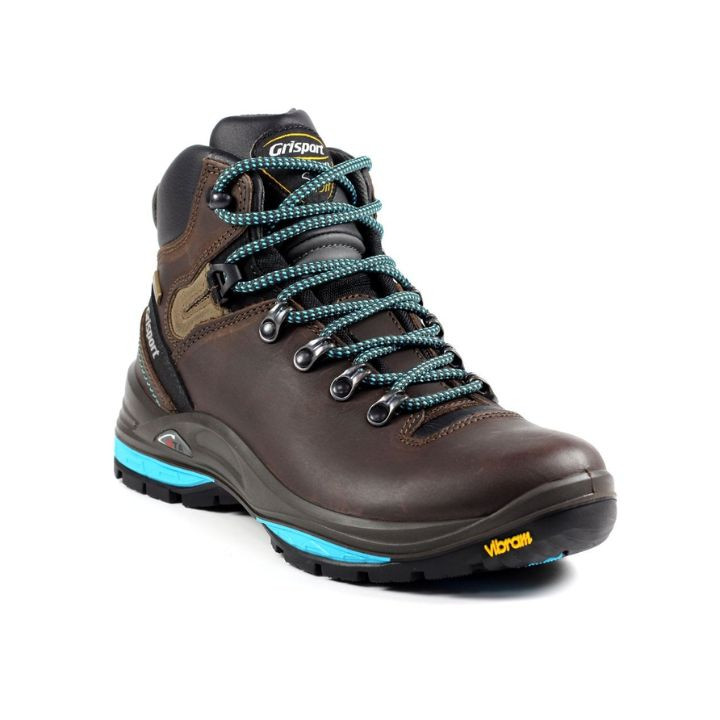 |
Soft leather with Spotex waterproof lining for dry, breathable comfort. |
Proper boot care helps maintain comfort, support and waterproofing, so our boot care and waterproofing tips guide is worth a read.
If you're looking for supportive and waterproof options, browse our range of waterproof Grisport walking boots designed for comfort in UK conditions.
3. Supportive Sole Unit with Good Grip
A comfortable walking boot should include a sole unit that offers grip, cushioning and shock absorption. This helps reduce foot fatigue and improves confidence on wet, rocky or uneven ground. Good grip matters just as much for everyday countryside walking as it does for longer hikes.
Grisport boots use a unique multi-layer sole design to improve comfort and stability. Learn more about the technology in our guide to Grisport boot construction and sole units.
Example: Boot With Supportive Sole
| Boot | Image | Key Benefit |
|---|---|---|
| Hoggs of Fife Aonach II Boot |  |
Vibram sole with cushioning and grip for long-distance comfort. |
If you want to understand how sole design affects comfort and grip, read our guide to Vibram soles vs rubber soles.
4. Ankle Support
Ankle support helps keep your foot stable on uneven ground and reduces the risk of twists or slips. Higher-cut boots are often a better choice for hill walking, rough terrain and carrying heavier loads.
Example: Boot With Strong Ankle Support
| Boot | Image | Key Benefit |
|---|---|---|
| Grisport Quatro Boot | 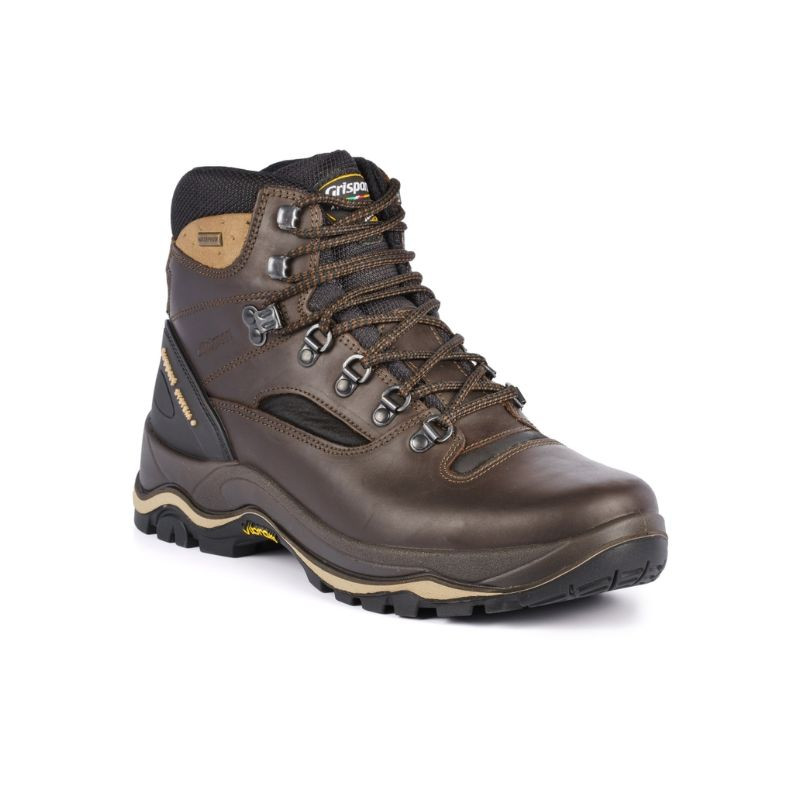 |
Secure ankle support with self-locking hooks for a stable fit. |
5. Durable Materials and Protective Features
Quality leather, durable synthetics and protective details such as a rubber rand all help improve long-term comfort. They protect the boot from wear, add structure and help it perform better in rougher conditions.
Example: Boot with Durable Construction
| Boot | Image | Key Benefit |
|---|---|---|
| Northwest Territory Pelly Boot | 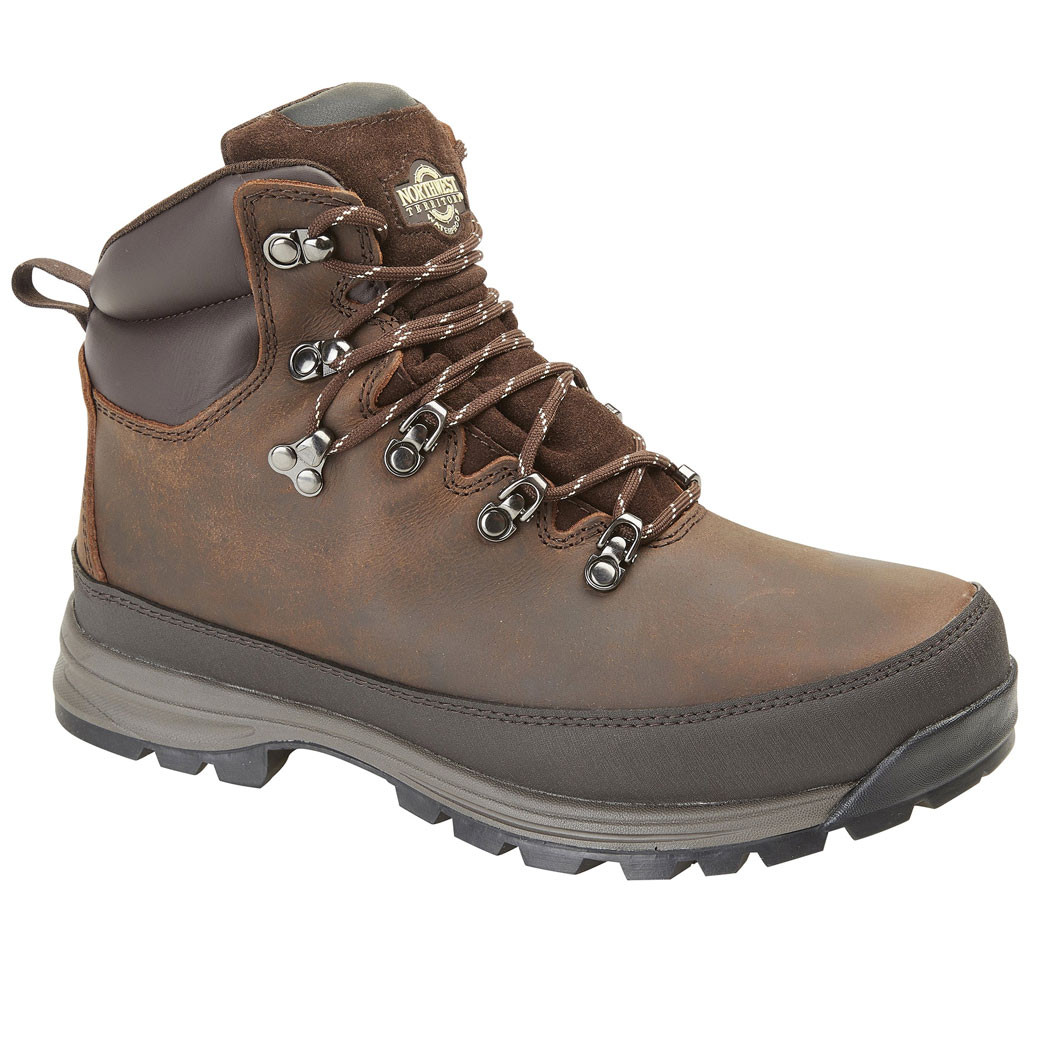 |
Durable construction with full rubber rand for added protection. |
How to Choose Comfortable Walking Boots
To choose comfortable walking boots, focus on fit first, followed by support, waterproofing and grip. Start by making sure the boot fits securely around your heel, with enough room for your toes to move. Then consider the type of terrain you walk on, as this will determine how much support and grip you need.
For everyday walking, lightweight boots with cushioning and flexibility are often enough. For hill walking or rough terrain, choose boots with stronger ankle support, durable materials and a more structured sole unit.
Additional Considerations for All-Day Comfort
Boot Weight
Lighter boots reduce fatigue over long distances. If you are not tackling extreme terrain or carrying heavy loads, lightweight walking boots can be a more comfortable choice for everyday use.
Fit and Sizing
Always try boots with walking socks and make sure there is enough room to wiggle your toes. Look for a snug heel fit to avoid slipping. Even high-quality boots can feel uncomfortable if the fit is wrong.
Insoles
Some boots come with cushioned insoles, but if you need extra arch support or suffer from foot pain, specialist insoles can make a big difference to comfort.
You may also want to browse our range of comfortable walking shoes if you prefer a lighter option.
Choosing the right walking boots comes down to fit, support, grip and waterproof comfort.
Explore our range of comfortable walking boots to find the best option for everyday walking, hiking and wet weather use.
Originally published 11th March 2016. Updated April 2026.
Find our country clothing guides useful?
Add Cherry Tree Country Clothing as a preferred source on Google to see more of our guides in Google Search.