Posted by Bethan Bithell on Feb 26, 2026
How should walking boots fit? Walking boots should feel secure and supportive, without pinching your toes or letting your heel lift as you walk. If the fit is wrong, you’ll usually find out through blisters, sore feet, heel slip, or hot spots on longer walks.
This guide shows you how walking boots should fit, how much toe room you need, how to measure your feet at home, and three simple tests you can do indoors before wearing your boots outside.
Why walking boot fit matters
Walking boots need to hold your foot steady, protect your toes, and support your ankles and arches. If your boots are too tight, your feet can’t spread naturally as they warm up. If they’re too loose, your foot slides around and friction builds quickly.
- Too tight: pressure points, numbness, rubbing, sore toenails
- Too loose: heel lift, foot movement, blisters, lack of control on uneven ground
Five signs your walking boots don’t fit properly
Use this quick check after a short walk around the house (with clean socks and on clean floors):
- Toes feel squashed or touch the front of the boot
- The boot gapes at the sides as you walk
- Your heel lifts up and down when you take a step
- You feel rubbing or “hot spots” on heels, toes, or the sides of your feet
- Blisters appear even after short walks
If you’re already struggling with rubbing or sore spots, read our guide to preventing foot blisters when walking for practical fixes.
Tip: After walking, you should not see red marks, imprints, or sore pressure points. Those are early warning signs.
How to measure your feet for walking boots at home
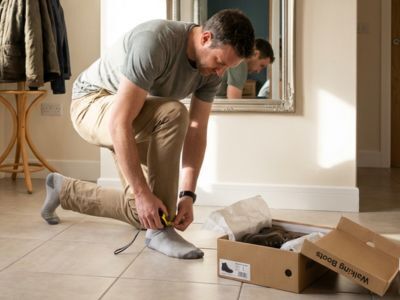
Measuring your feet properly helps you get closer to the right size before you even try boots on.
- Measure your feet at the end of the day (feet swell as the day goes on).
- Measure while standing, with your full weight on your foot.
- Measure both feet. Fit boots to the larger foot.
- Wear the socks you’ll actually walk in while checking fit.
- Keep in mind that different brands can size slightly differently.
If you’re between sizes, many walkers go up half a size to allow for thicker socks and natural swelling on longer walks.
The importance of wearing walking socks when trying boots
Walking socks affect fit. Thickness, cushioning and material can change how your boots feel, especially around the heel and toe box. Always try boots on with the socks you plan to use outdoors.
For help choosing the right socks, read our guide: Walking socks – which one is best for me?
How much toe room should walking boots have?
Your toes should not touch the front of the boot when you stand normally. You also need enough space for your feet to swell on longer walks and for downhill sections where your foot can slide forward slightly.
- You should be able to wriggle your toes freely.
- Aim for roughly 5–10mm space in front of your longest toe.
- Your toes should never knock the front of the boot when walking downhill.
Three simple tests to check walking boot fit at home
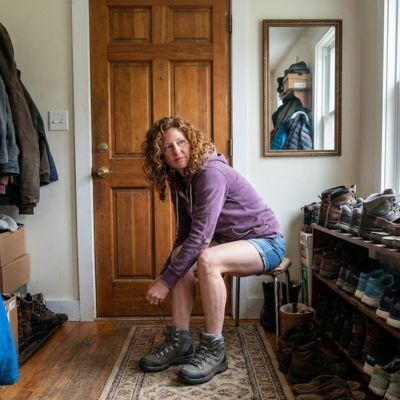
These tests help you confirm the fit indoors before you commit to wearing your boots outside.
- Test 1: Heel space test
- Test 2: Width and volume test
- Test 3: Downhill movement test
If you feel your boots are close but not quite right, you may benefit from supportive inserts. See our guide here: Which walking boot insoles should I choose?
Test 1: Heel space test
This checks if the boot length is right and helps reduce heel slip and blisters.
Step 1: Put your boots on but leave the laces undone.
Step 2: Slide your foot forward so your toes lightly touch the front of the boot.
Step 3: Check the gap behind your heel by placing a finger down the back of the boot.
You want roughly one finger of space behind the heel. Too much space can lead to heel movement and blisters. Too little space can feel tight once your feet warm up and swell.
Test 2: Width and volume test
Walking boots should hold your foot securely without squeezing the sides of your feet. If the boot is too narrow, you’ll often feel pressure on the outside of the forefoot or little toe area.
Step 1: Put your boots on and lace them as you would for a walk.
Step 2: Stand up and put your full weight through your feet.
Step 3: Check for pinching across the forefoot and look for obvious gaping over the edge of the sole.
Step 4: While standing, press the sides of the boot gently. You want a little give, not tight pressure against your foot.
If the width feels tight, try a different style or a wider-fitting model. Some boots suit narrow feet, others suit wider feet, even within the same brand.
Test 3: Downhill movement test
This test helps prevent toe bang, black toenails, and friction on steeper ground.
Step 1: Lace the boots as normal.
Step 2: On a safe indoor slope (or a sturdy step), walk down and notice if your foot slides forward.
If your foot moves forward inside the boot, you may need a different size, a different boot shape, or more secure lacing.
If your walking boots fit correctly but your heel still lifts when you move, the issue may not be the size. Adjusting your lacing technique to improve heel hold can lock your foot in place and reduce friction without needing to change boots.
You can also reduce movement by using supportive accessories such as insoles, heel lifts, or volume reducers.
Need help choosing walking boots?
A good example is the Grisport Excalibur walking boot, which offers lightweight waterproof support for everyday walks.
If you’re still unsure, browse our range of walking boots and check the sizing notes on each product. If you want advice before ordering, get in touch and we’ll help you narrow down the best options for your foot shape and walking needs.
Pair your footwear with practical outerwear such as our Arctic Storm jackets for full wet weather protection.
Returns and trying boots on at home
Try your new boots on indoors, on a clean floor, with clean socks. Walk around the house and complete the tests above before wearing them outside.
If the size or fit isn’t right, you’re welcome to return them for an exchange, as long as they’re in the same condition as when you received them and haven’t been worn outdoors. Read our returns policy for full details.
Original publish date: February 2010
Last updated: 26th February 2026
Walking boot fitting FAQs
No. They should feel secure, but they should not pinch, rub, or create pressure points indoors. Leather can soften slightly over time, but the basic fit should feel right from the start.
Sometimes. If you wear thicker socks, if your feet swell noticeably on long walks, or if you sit between sizes, going up half a size can work well. Always test fit properly at home first.
Start with fit and lacing. If the boot fits but your heel lifts, use a heel-hold lacing method. Insoles can also help by improving volume and support.
Aim for around 5–10mm in front of your longest toe and enough space to wiggle your toes freely. Your toes should never hit the front on downhill sections.
Modern walking boots should feel comfortable from the start, but they may need a short period of gradual wear. Wear them indoors first and then on short local walks before tackling longer routes. If boots feel painful or cause rubbing straight away, the fit may be wrong rather than something that will improve with time.
Shop walking boots and fitting essentials
If you now know how your walking boots should fit, the next step is choosing a pair that matches your foot shape, walking style, and the ground you’ll be on. Here are a few options and fitting extras that can help.