Posted by Bethan on May 28, 2026
What Clothing Do You Need for Pheasant Beating?
Pheasant beating can involve anything from pushing through brambles and woodland to walking across wet fields on a cold morning. Some days are dry and straightforward. Other days you're climbing over ditches, walking through soaked cover crops and wondering how your boots filled with water so quickly.
The right clothing makes a big difference. If you're cold, soaked through or constantly stopping to pull thorns out of your trousers, the day becomes harder work than it needs to be. Choosing suitable beating clothing and boots helps keep you comfortable throughout the day.
Most pheasant beating outfits include:
- Waterproof jacket or smock
- Warm mid layer or fleece
- Durable trousers
- Waterproof boots or wellingtons
- Warm socks, gloves and headwear
The aim isn't to wear as many layers as possible. It's about staying comfortable while still being able to move easily through rough ground and thick cover.
| Clothing Item | Why It Matters |
|---|---|
| Waterproof Jacket | Protection from rain, wind and wet cover |
| Mid Layer or Fleece | Adds warmth without too much bulk |
| Durable Trousers | Helps protect against brambles and rough ground |
| Boots or Wellies | Grip, support and dry feet |
| Accessories | Extra warmth and comfort |
Start with a shooting shirt, add a warm shooting jumper or fleece as your mid layer, then finish with a waterproof or tweed shooting jacket depending on the conditions.
If you're planning a career in gamekeeping or simply want to understand the clothing used by estate staff, our guide to what gamekeepers wear throughout the year explains the essential jackets, footwear and layering systems used on modern shooting estates.
Choosing the Right Jacket for Pheasant Beating
Your jacket usually ends up doing most of the hard work during a beating day.
You might start a cold morning standing around wishing you'd worn another layer, then half an hour later be pushing through woodland and starting to warm up quickly.
That's why waterproof and breathable fabrics matter.
Quiet fabrics can also make a difference. Stiff or noisy waterproof materials can become frustrating when you're moving through woodland and cover for long periods.
Many beaters choose waterproof shooting coats because they offer protection from rain, wind and wet vegetation while still allowing freedom of movement throughout the day.
Look for:
- Waterproof protection
- Breathable materials
- Durable outer fabric
- Large pockets
- Freedom of movement through the shoulders
Heavy jackets can feel fine at the start of the day, but after several hours walking through rough ground they can become tiring. Lightweight waterproof jackets and smocks often work well because they keep the weather out without feeling restrictive.
Some beaters actually prefer older jackets or tougher field gear they don't mind dragging through blackthorn, brambles and thick cover all day. Lightweight jackets can feel comfortable at first, but thinner materials sometimes struggle once they repeatedly catch on thorns and rough woodland.
Durability becomes even more important later in the season when cover is wetter, heavier and harder going underfoot. Choosing hardwearing waterproof outerwear designed for field sports can help your clothing last longer and perform better throughout the shooting season.
View our beating clothing range
Base Layers and Mid Layers
Getting your layers right can make a big difference during a pheasant beating day.
One of the biggest mistakes people make is dressing too heavily at the start of the morning. Standing around before the first drive can feel bitterly cold, so it's tempting to pile on thick layers. The problem comes half an hour later when you're pushing through woodland, climbing banks and walking through heavy cover while overheating.
Many experienced beaters say layering properly matters more than simply wearing the thickest jacket you own.
A simple layering system often works best:
- Base layer to help move moisture away from your skin
- Mid layer such as a fleece for warmth
- Waterproof outer layer for wind and rain protection
This gives you the flexibility to remove layers as conditions change throughout the day rather than feeling stuck in one heavy outfit.
During colder days in the beating line, Hoggs of Fife fleeces provide lightweight warmth without restricting movement.
Shirts
Traditional country shirts remain popular because they are comfortable, breathable and easy to wear for long periods outdoors.
Early season shoot days can sometimes be surprisingly mild once you start moving, so a lighter shirt may be enough underneath a waterproof layer. Later in the season, brushed cotton shirts and heavier fabrics can feel far more comfortable on cold windy mornings.
Practicality usually matters more than appearance once you're walking through wet grass, muddy gateways and thorny cover. Some beaters even prefer wearing older shirts and tougher clothing they don't mind catching on brambles or getting covered in mud.
View our collection of mens shooting shirts
Fleeces
A good fleece can end up being one of the most useful pieces of clothing you own during the shooting season.
It adds warmth without too much weight and can easily be tied around your waist or carried once you warm up. This becomes useful on days where the weather keeps changing or when you're moving between standing still and walking long distances.
Lightweight fleeces often work particularly well for pheasant beating because they allow easy movement through woodland and thick cover without feeling bulky under a jacket.
View our range of shooting fleeces
Best Trousers for Pheasant Beating
Your legs normally take most of the punishment.
Walking through wet grass, brambles and rough undergrowth soon shows the difference between ordinary trousers and clothing designed for field use.
Look for:
- Durable materials
- Flexibility
- Water resistance
- Reinforced areas around knees and seat
- Good movement
If you've ever caught thinner trousers on blackthorn bushes or soaked through after walking across wet cover crops all morning, you'll know why durability matters. Lightweight everyday trousers may feel comfortable at first but often struggle once they meet mud, brambles and repeated use throughout the shooting season.
Hard-wearing shooting trousers with reinforced areas around the knees and seat tend to cope far better with rough ground, kneeling on wet grass and pushing through heavy cover.
View our range of waterproof shooting trousers
Boots or Wellies for Pheasant Beating?
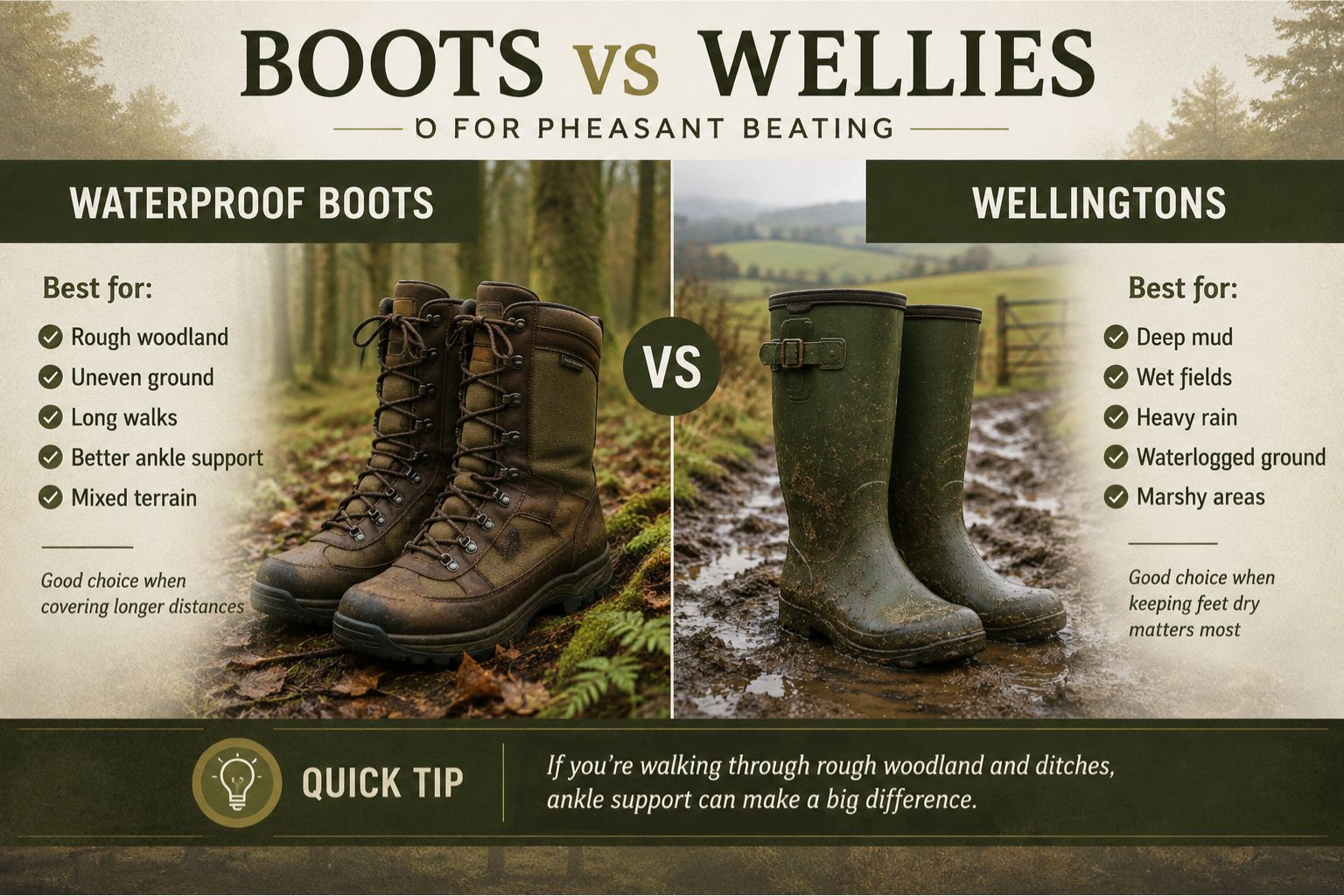
Footwear often comes down to ground conditions.
Boots usually provide:
- Better ankle support
- More grip
- Greater comfort on longer walks
Wellies can work better when:
- Conditions are very muddy
- Ground is heavily waterlogged
- Deep puddles become unavoidable
If you're crossing uneven ground, ditches or woodland paths, ankle support quickly becomes important. A twisted ankle can end the day early.
Whatever you choose, dry feet make a huge difference. Wet feet at nine in the morning often still feel wet at three in the afternoon.
Don't Forget the Small Things
It's usually the smaller things people forget about that end up becoming the most irritating later in the day.
Cold hands, wet socks or rain running down the back of your neck can become uncomfortable long before your jacket starts letting water through.
Experienced beaters often mention that once your feet become cold and wet, the rest of the day can quickly feel miserable. Walking through wet grass, muddy gateways and soaked woodland for several hours soon shows the value of decent socks and waterproof footwear.
A few useful additions include:
- Warm wool blend socks
- Waterproof gloves
- Waterproof hat or cap
- Neck warmer or snood
- Gaiters for wet ground and muddy conditions
Some beaters also carry a spare pair of socks in the car or game cart, especially on wetter days later in the season.
These smaller items don't take up much space but can make a big difference to comfort during a long day in the field.
Final Thoughts
Knowing what to wear for pheasant beating comes down to comfort, movement and protection.
The weather rarely stays the same for an entire day and ground conditions can change quickly. Having the right clothing means you can spend less time thinking about cold feet, wet trousers or carrying heavy layers and more time enjoying the day itself.
Browse our range of mens shooting clothing designed for beating, shoot days and countryside work.
Pheasant Beating Gear FAQs
Pheasant beating involves walking through woodland and cover to encourage birds to move toward the shooting line.
Boots generally provide better support for uneven terrain, while wellies often work better in muddy conditions.
Waterproof trousers or overtrousers can help keep you dry when moving through wet grass and vegetation.
Muted greens, browns and traditional country colours are common choices.
Recommended Clothing for Pheasant Beating
Here are a few popular choices for wet weather, rough ground and long days in the field.
Related Shooting Guides
Looking for more advice on waterproof jackets, shooting clothing and practical outdoor gear? These guides cover layering, wet weather protection and country clothing for long days in the field.
Shooting Jacket Guide for Women
Practical advice on choosing a women's shooting jacket for wet weather, cold mornings and long days outdoors.

Ridgeline Torrent vs Monsoon Jacket
Compare two popular Ridgeline waterproof jackets and see which works best for wet and demanding conditions.
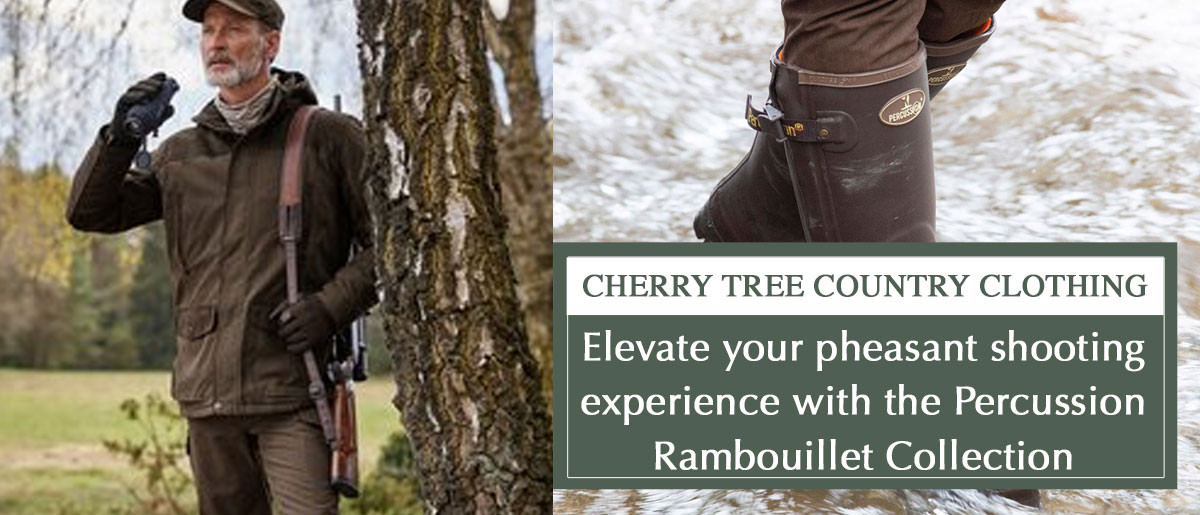
Percussion Rambouillet Collection Guide
Explore practical pheasant shooting clothing designed for comfort, durability and wet weather field use.
Shop Beating & Picker-Up Clothing
Looking for clothing and equipment for the beating line? Explore our specialist categories below.
Beating Clothing
Browse jackets, trousers, smocks and practical clothing designed for beating, picking-up and country sports.
View Category →
Beating Boots
Find waterproof boots with the grip, support and comfort needed for long days in the field.
View Category →
Beating Gaiters & Leggings
Protect your legs from mud, wet grass and brambles when working through rough terrain.
View Category →
Beating Sticks
Traditional and practical beating sticks for shoot days and countryside use.
View Category →
Find our country clothing guides useful?
Add Cherry Tree Country Clothing as a preferred source on Google to see more of our guides in Google Search.