Posted by Bethan Bithell on May 19, 2026
Rewaterproofing your jacket helps keep it working for longer, especially if rain no longer beads on the surface or your coat feels damp around the shoulders, sleeves or pockets.
This guide explains when to reproof a jacket, how to wash it correctly, which Nikwax product to use, and when it may be time to replace your waterproof jacket instead. If you are looking for a new coat after reading this guide, take a look at our range of waterproof jackets.
Why Waterproof Jackets Need Reproofing
Most waterproof jackets have a durable water repellent finish, often called DWR. This helps rain bead on the outside of the fabric and roll away, rather than soaking into the outer layer.
Over time, mud, body oils, smoke, detergent residue and everyday wear can affect this finish. Your jacket may still have a waterproof membrane, but if the outer fabric starts holding water, it can feel cold, heavy and less breathable.
How Do You Know When Your Jacket Needs Reproofing?
A waterproof jacket should make rain bead up and roll away. If water starts soaking into the outer fabric instead, the Durable Water Repellent (DWR) finish may be wearing away and your jacket could be ready for reproofing.

Needs Reproofing
What you can see:
- Water soaks into the fabric instead of forming beads
- Outer fabric looks wet
- Jacket may feel heavy
- Reduced breathability
- You can start feeling damp inside
What it means: The outer DWR coating is wearing away and may need refreshing.
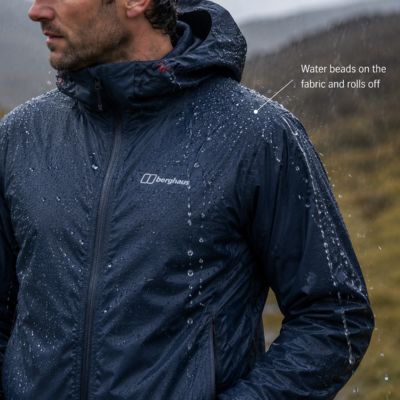
Fully Waterproof
What you can see:
- Water forms small beads
- Droplets roll off the surface
- Fabric stays lighter
- Breathability works properly
- Better comfort in wet weather
What it means: The DWR coating is working correctly and helping rain roll away.
The first signs often appear on the areas that take the most wear. Check the shoulders, neck, cuffs, sleeves, pockets and lower front of the jacket.
You can also do a quick water bead test:
- Lay your jacket flat or hang it up.
- Pour or spray a small amount of water onto the outer fabric.
- If the water beads and runs off, the water-repellent finish is still working.
- If the water soaks in or darkens the fabric, your jacket needs cleaning or reproofing.
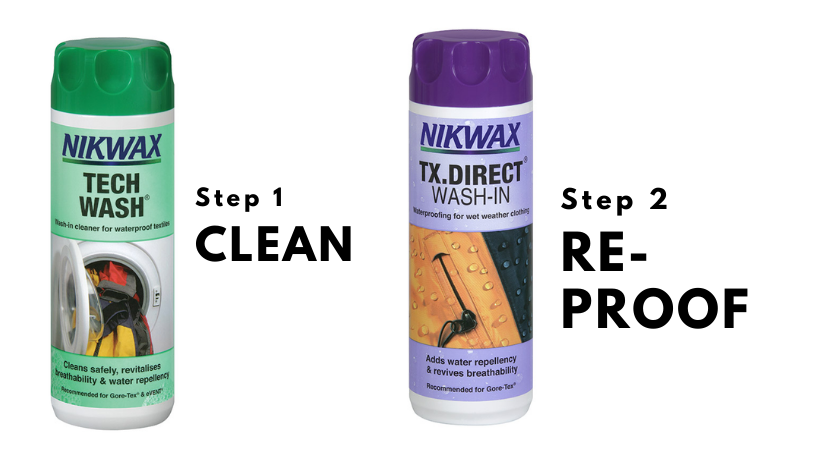
Start by washing your jacket with Nikwax Tech Wash. This can help revive existing water repellency and breathability. If water still does not bead after washing, reproof with Nikwax TX.Direct.
Can You Wash a Waterproof Jacket in a Washing Machine?
Most waterproof jackets can be machine washed, but always check the care label first. Use a gentle cycle, avoid fabric softener and use a cleaner made for waterproof clothing.
Many people avoid washing waterproof jackets because they worry about damaging them. In reality, dirt and body oils can reduce performance too, so cleaning the jacket properly is part of looking after it.
What Washing Machine Setting Should You Use?
Use the care label as your guide. In most cases, a cooler wash and gentle cycle is best. Avoid high spin speeds and harsh wash settings, as these can put extra stress on seams, linings and technical fabrics.
Can You Use Normal Detergent?
It is better not to use normal laundry detergent on waterproof jackets. Standard detergents can leave residue on the fabric, which may stop the water-repellent finish from working properly.
If you have used normal detergent by mistake, the jacket is not always ruined. Wash it again with Nikwax Tech Wash, then test the fabric again before deciding if it needs reproofing.
What Is Nikwax?
Nikwax makes cleaning and waterproofing products for outdoor clothing, footwear and equipment. Its products are designed to clean outdoor fabrics, restore water repellency and help maintain breathability.
- Nikwax Tech Wash cleans waterproof clothing and helps revive water repellency.
- Nikwax TX.Direct adds water repellency and helps revive breathability on waterproof clothing.
- Nikwax Down Wash Direct and Nikwax Down Proof are better suited to down-filled jackets.
- Nikwax Softshell Proof is made for softshell garments.
- Nikwax Cotton Proof is made for wet-weather cotton and polycotton clothing.
How to Rewaterproof a Jacket Step by Step
Always check the care label on your jacket before washing or reproofing. Some garments have specific instructions, and not every jacket should be treated in the same way.
- Empty all pockets. Remove tissues, receipts and anything else left inside.
- Close zips and fasten Velcro. This helps protect the jacket during washing.
- Clean your washing machine drawer. Remove old detergent residue where possible.
- Wash with Nikwax Tech Wash. Use Nikwax Tech Wash instead of normal detergent.
- Check the water bead test again. If water beads after cleaning, you may not need to reproof yet.
- Reproof if needed. Use Nikwax TX.Direct on suitable waterproof clothing.
- Dry according to the care label. Some jackets allow low heat tumble drying, but always follow the garment and product instructions.
Do not use fabric softener or bleach products. These can coat or damage waterproof fabrics and reduce the performance of water-repellent treatments.
Wash-In or Spray-On Reproofing: Which Should You Choose?
Some waterproof treatments come as wash-in products while others come as spray-on treatments.
- Wash-in treatments work well for full waterproof garments where you want even coverage across the whole item.
- Spray-on treatments can work well if you want to target only the outer fabric while reducing treatment on inner linings.
Always follow the instructions provided with the treatment product and garment.
Which Nikwax Product Should You Use?
| Jacket Type | Best Product | Best For |
|---|---|---|
| Waterproof jackets | Nikwax Tech Wash followed by Nikwax TX.Direct | Cleaning and reproofing breathable waterproof clothing |
| Softshell jackets | Nikwax Tech Wash and Softshell Proof | Restoring water repellency on softshell garments |
| Down jackets | Nikwax Down Wash Direct and Down Proof | Cleaning and reproofing down-filled jackets |
| Fleece jackets | Nikwax Tech Wash or a specialist fleece treatment where needed | Keeping fleece clean and helping it perform better outdoors |
| Cotton or polycotton jackets | Nikwax Cotton Proof | Wet-weather cotton and polycotton clothing |
Examples of Waterproof and Technical Fabrics
You may see different waterproof and technical fabric names on your jacket labels. These materials can often be cleaned and treated differently, so always check the care label before washing.
- Waterproof and breathable fabrics: GORE-TEX, eVENT, Sympatex and Ultrex
- Softshell fabrics: Windstopper, Windbloc, Schoeller and Polartec Powershield
- Fleece and insulated fabrics: Polartec fleece, Primaloft and Thinsulate
- Cotton and polycotton outdoor clothing: Waxed cotton and weather-resistant cotton garments
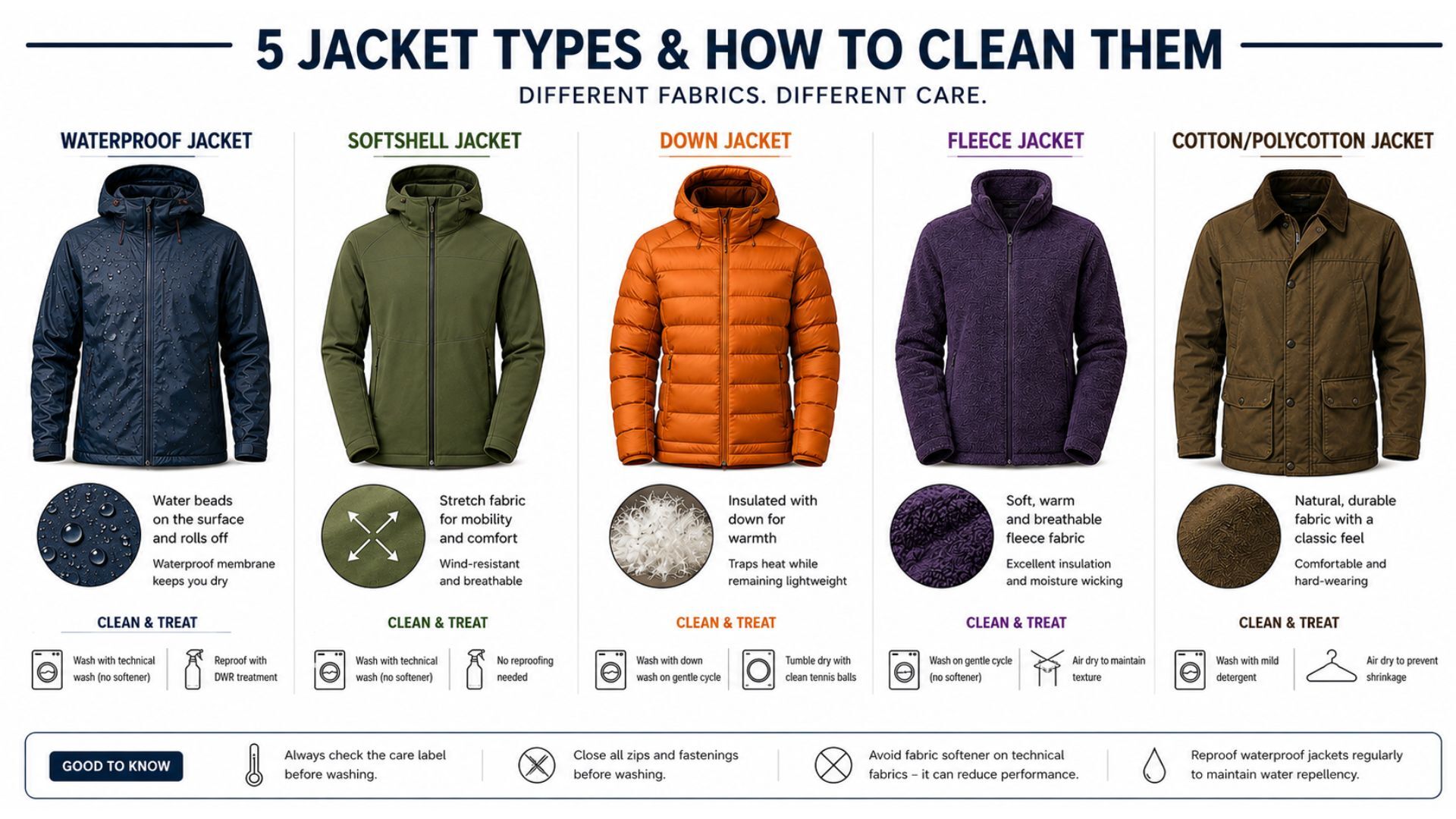
Can You Reproof Different Types of Jackets?
Tap image to enlarge
Waterproof jackets
Most breathable waterproof jackets can be cleaned with Nikwax Tech Wash and reproofed with Nikwax TX.Direct. This is usually the best option for walking jackets, waterproof coats and many outdoor work jackets.
Softshell jackets
Softshell jackets are not usually fully waterproof, but they often have a water-repellent finish. Use a softshell-specific proofer if you want to restore water resistance without affecting comfort and movement.
Some softshell jackets use fabrics such as Windstopper, Windbloc or Polartec fabrics, which may benefit from specialist softshell treatments.
Many modern mens smocks use technical fabrics that need specialist cleaning products.
Down jackets
Down jackets need more care. Avoid treating them like a standard waterproof shell. Use products designed for down and follow the care label carefully. Some insualted mens gilets and jackets need down-specific treatments.
Fleece jackets
Fleece is usually worn for warmth rather than full waterproof protection. Keeping it clean helps it perform better, but reproofing will not turn a fleece into a waterproof jacket.
Cotton and polycotton jackets
Some outdoor cotton and polycotton jackets can be treated with a cotton-specific waterproofing product. Check the garment label first, especially if the jacket has a waxed or specialist finish.
Why Is My Jacket Still Wetting Out After Reproofing?
If water still soaks into the outer fabric after cleaning and reproofing, there may be another issue. Older jackets can develop membrane damage, seam failure or flaking internal coatings that reproofing products cannot fix.
Heavy dirt build-up, detergent residue or using the wrong reproofing product can also reduce results. If in doubt, clean the jacket again with a specialist cleaner, check the care label and repeat the water bead test.
Common Jacket Reproofing Mistakes
- Using normal laundry detergent instead of a specialist cleaner.
- Adding fabric softener.
- Reproofing a dirty jacket before cleaning it.
- Using the wrong product for the fabric type.
- Ignoring the jacket care label.
- Assuming every damp-feeling jacket can be fixed with reproofing.
When Is It Time to Replace Your Jacket?
Reproofing can help restore performance, but it cannot repair every jacket. If the inner coating is bubbling, peeling or flaking, the fabric may have reached the end of its useful life.
You may also need to replace your jacket if seams have failed, the lining is breaking down, or rain is getting through despite cleaning and reproofing.
If your jacket has gone past the point of repair, take a look at our waterproof jacket collections:
How Often Should You Rewaterproof Your Jacket?
| Usage | Typical Reproofing Frequency |
|---|---|
| Occasional use | Every 12–18 months |
| Regular dog walking and everyday outdoor use | Every 6–12 months |
| Heavy use such as farming, shooting and hiking | Every few months if needed |
FAQs About Rewaterproofing a Jacket
Rewaterproof your jacket when water stops beading on the outer fabric after cleaning. For regular outdoor use, this may be once or twice a year. For occasional use, it may be less often.
Yes. Always clean the jacket first. Dirt, oils and detergent residue can stop the reproofing treatment from working properly.
It is better to avoid normal detergent. It can leave residue that affects the water-repellent finish. Use a specialist cleaner such as Nikwax Tech Wash.
Reproofing can restore the water-repellent finish on the outer fabric. It will not repair damaged membranes, broken seams or worn-out coatings.
Use the water bead test. If water beads and rolls off, the jacket is still repelling rain. If water soaks in, clean it first, then reproof it if needed.
Related Outdoor Clothing Guides
If you want more advice on caring for outdoor clothing and choosing the right waterproof gear, take a look at these related guides.